Sources checked 3 November 2026 · Confirm your date with the provider
Some links are affiliate links. We may earn a commission on qualifying bookings at no extra cost to you. This does not determine your price or guarantee availability.
Read two days as walking days
A product's duration can exclude the day you arrive in the gateway village, even when an overnight room is offered as an extra or inclusion. Ask for a calendar that starts with your pickup and ends at your next accommodation. It should show which night is in a village, which is on the mountain and which transfers are included.
This matters if you are counting holiday nights rather than hiking stages. An advertised two-day trek can occupy more of your trip once flights, road travel, briefing and recovery are included. Build that complete schedule first. If it is too tight, changing the objective may be more useful than trying to compress arrival and departure around an already full mountain program.
Recognize the two distinct challenges
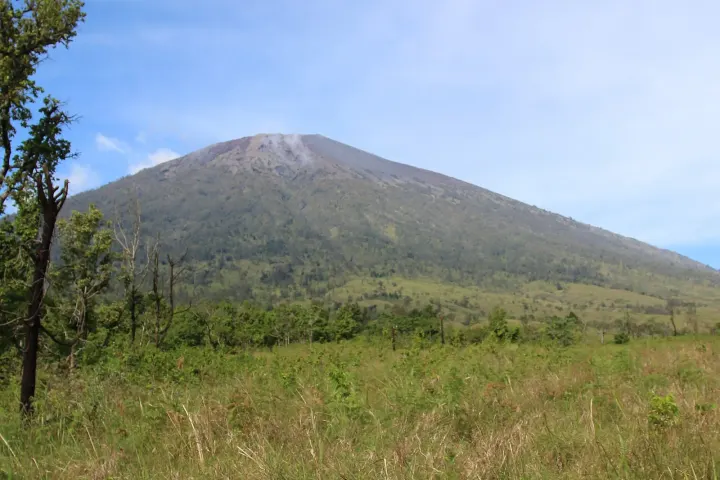
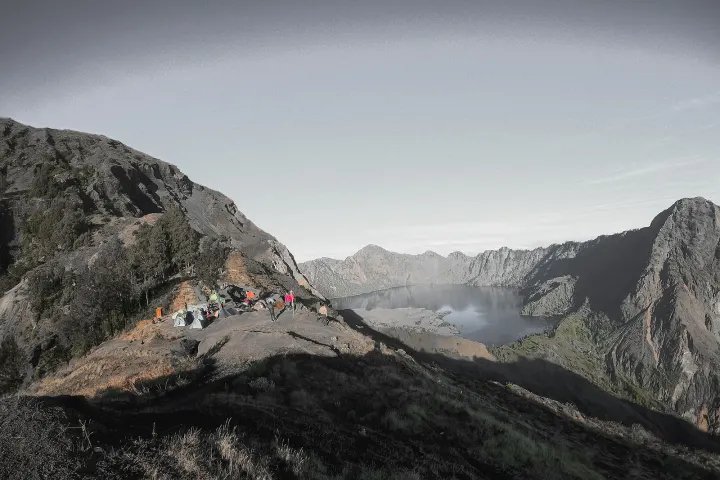
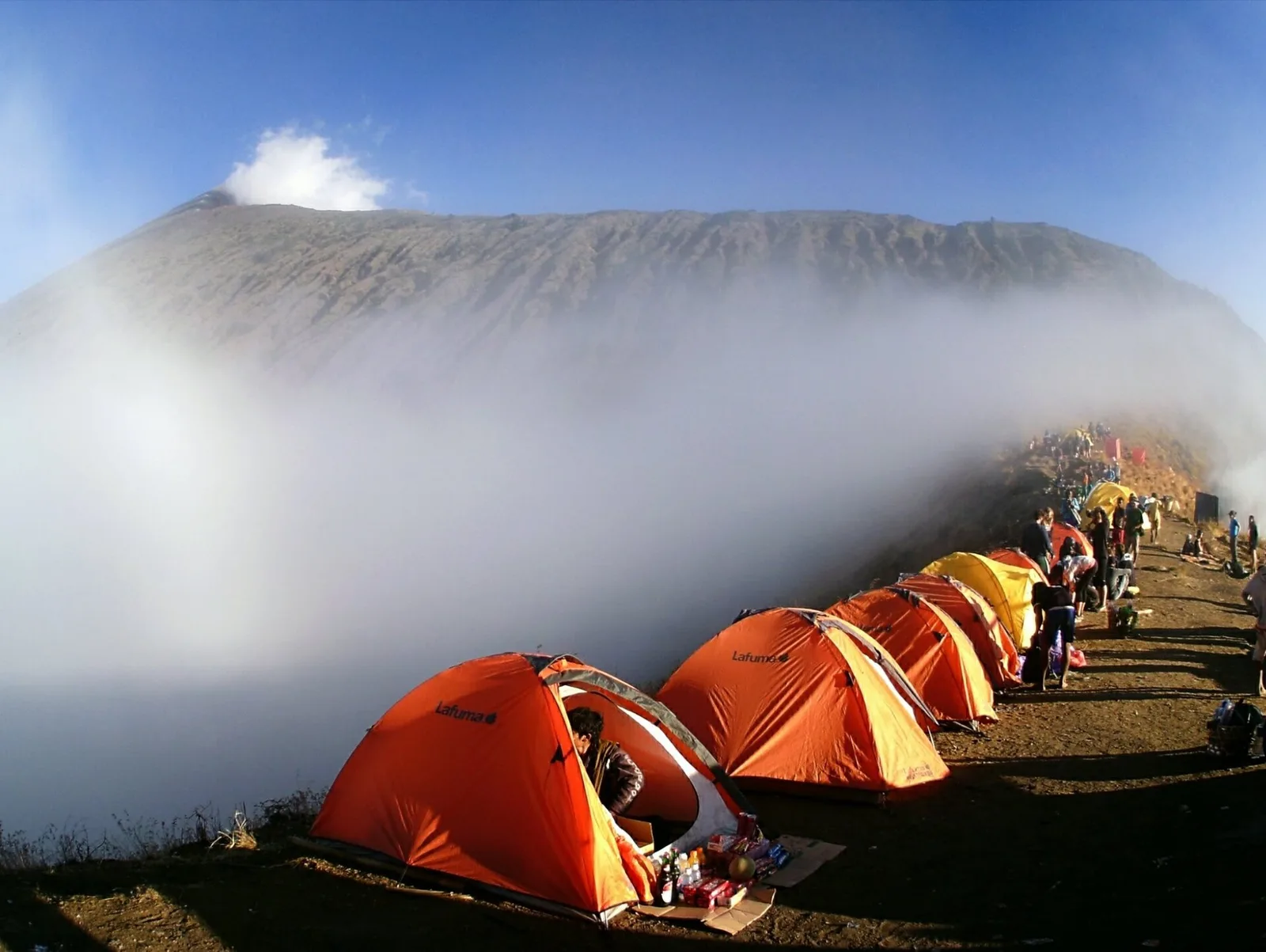
The Sembalun approach brings walkers through open country toward the rim, followed by a separate main-summit objective. The rim camp is not a place reached by vehicle. Discuss both the approach day and the following day's combined summit and descent with the operator, rather than asking only how many hours it takes to reach the highest point.
The return deserves equal attention. A group may feel differently after an early start and a summit attempt than it did at the beginning. Ask where the guide reassesses pace, how the team supports someone who turns around and whether the same guide remains with every subgroup. A useful answer explains procedures rather than simply promising that everyone can finish.
Use the arrival afternoon productively
Before departure, inspect the equipment you will use and identify anything missing while replacements are still practical. Try the fit of supplied items rather than assuming a size will be available at the trailhead. Confirm the sleeping arrangement, weather layers, light, footwear, personal pack and what the porter team will carry.
The briefing is also the time to resolve logistical details that become awkward on the mountain. Establish how much cash you need for agreed extras, where your main luggage stays, how you contact the operator after finishing and which vehicle takes you onward. Eat and rest around that preparation; filling the arrival evening with another demanding excursion usually adds little to the main objective.
Make the summit attempt an agreed decision
Ask what criteria the guide uses to continue, delay or turn back, and how your group will communicate if someone is struggling. The goal should be a shared understanding of the decision process. Avoid an arrangement in which a participant feels obliged to continue because the package title promises sunrise at the top.
A turnaround plan is especially important for mixed experience levels. Find out whether a person can remain at camp, return with a guide or join a different pace group, and whether any of those options needs extra staffing arranged in advance. Do not assume that a large group automatically provides more flexibility; the relevant question is how the people and support are organized.
Check the complete quote
For this itinerary, compare the village night, transfer to the gate, park arrangements, guide and porter service, camping equipment, meals, water, insurance and final transfer. Write down which items are included in the selected option and which are paid separately. Also ask whether a personal porter, equipment hire or a changed route affects the total.
The verified Star Rinjani listing illustrates why reading beyond a title matters: it advertises a two-day, one-night summit experience while its duration field says one day. That inconsistency does not tell you the service is invalid, but it does require written clarification. Use the operator guide to compare the corrected proposal with another provider's complete terms.
Arrange a sensible finish
Do not plan your onward journey only from the walking finish time quoted in a brochure. You still need to reach the exit, meet the vehicle, recover luggage and travel to your next base. If the operator stores bags in Senaru but the trek returns to Sembalun, ask how that extra movement is handled.
A post-trek night can be valuable even when the itinerary finishes on schedule. It gives the group time to eat, shower, dry equipment and make the next transfer without rushing. If a fixed flight or ferry is involved, ask for a conservative road plan and keep the connection separate where possible. This guide cannot guarantee a minimum connection time.
Choose a different objective when it fits better
If the compact summit schedule does not match your experience or priorities, compare a different mountain objective rather than treating a longer itinerary as automatically easier. A three-day route may add lake stages and substantial extra walking. A Senaru rim camp changes the objective; a Pergasingan outing changes the scale of the whole trip.
The best alternative is the one you actually want to experience. Read the longer-trek guide, the gateway comparison and the Pergasingan guide with your group. Then ask providers for a route that matches your shared interests and current permissions, leaving valley time as a positive part of the visit.
A typical timeline and the safety lessons
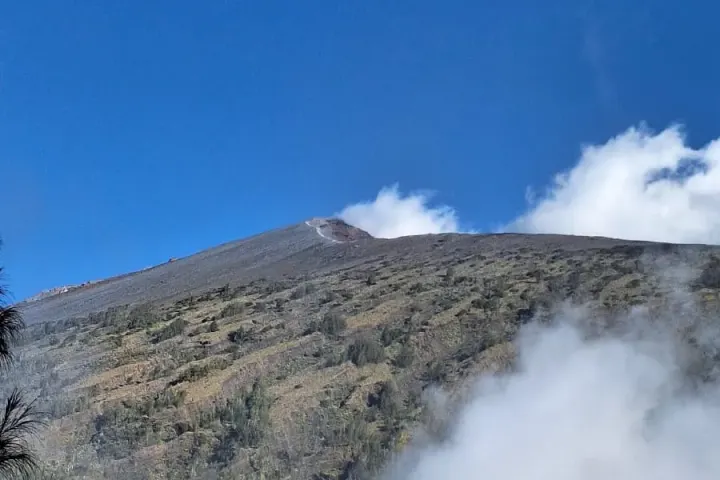
The summit section is steep, loose and exposed, and it is walked in the dark. In June 2025 a Brazilian hiker died after falling near Cemara Nunggal on this route, and a Malaysian hiker died in a fall elsewhere on the mountain in May 2025; the Jakarta Post counted nine deaths on Rinjani between 2017 and 2024. Stay with your guide, carry a working headlamp and agree beforehand that anyone may turn back without pressure.
- Arrival day: reach Sembalun, obtain the health certificate the park requires the day before the climb and check your equipment.
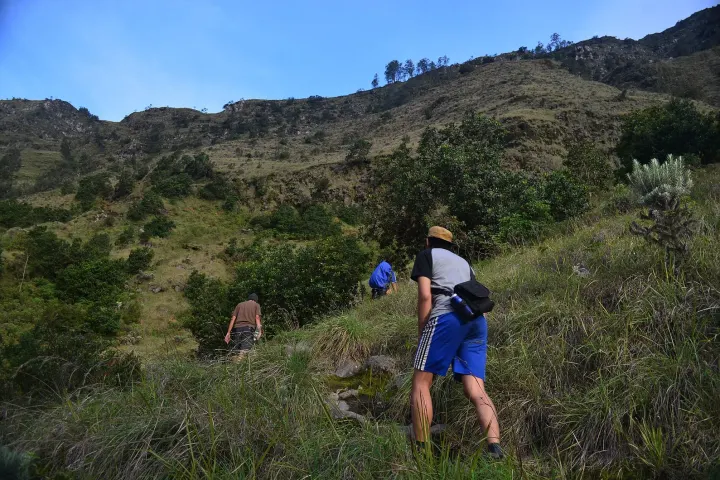
- Day one: medical check, registration and briefing, then roughly seven to eight hours of walking via Pos 1–3 to the Pelawangan Sembalun camp at about 2,639 m.
- Day two: wake around 02:30, a summit push of about three to four hours to 3,726 m, about two hours back to camp, then the long descent to the village.
- Personal load: one package we checked lets porters carry only about 2 kg of personal items per hiker; a private porter costs extra.
Questions before you go
Does two days include the arrival night?
Not necessarily. Ask for a dated schedule showing the pre-trek room, mountain night, pickup and final drop-off.
Is the summit guaranteed?
No. The objective remains conditional on access, conditions and the group's progress. Agree how decisions and turnarounds are managed.
Is three days automatically easier?
No. Longer packages may add the lake and another rim, increasing total walking. Compare the actual daily stages.
Can I fly out immediately after the descent?
Do not assume an estimated trek finish supports a fixed flight connection. Include the road transfer and ordinary post-trek tasks, and consider another night.
How many hours do you walk on a two-day summit trek?
Published itineraries suggest about seven to eight hours to the rim on day one, then a pre-dawn summit push of three to four hours and a return to camp before the descent. Long days are normal; ask your operator for its own timings.
Sources & editorial notes
The bibliography separates park notices, volcanic monitoring, forecasts, tourism records and provider listings. A source check is dated evidence; it is not a live operating-status guarantee.
- Ministry of Tourism, Indonesia ↗
- GetYourGuide / Star rinjani ↗
- Balai Taman Nasional Gunung Rinjani ↗
- The Jakarta Post via Asia News Network ↗
- Wikipedia ↗
- Bobobox (operator listing) ↗
- detikBali ↗